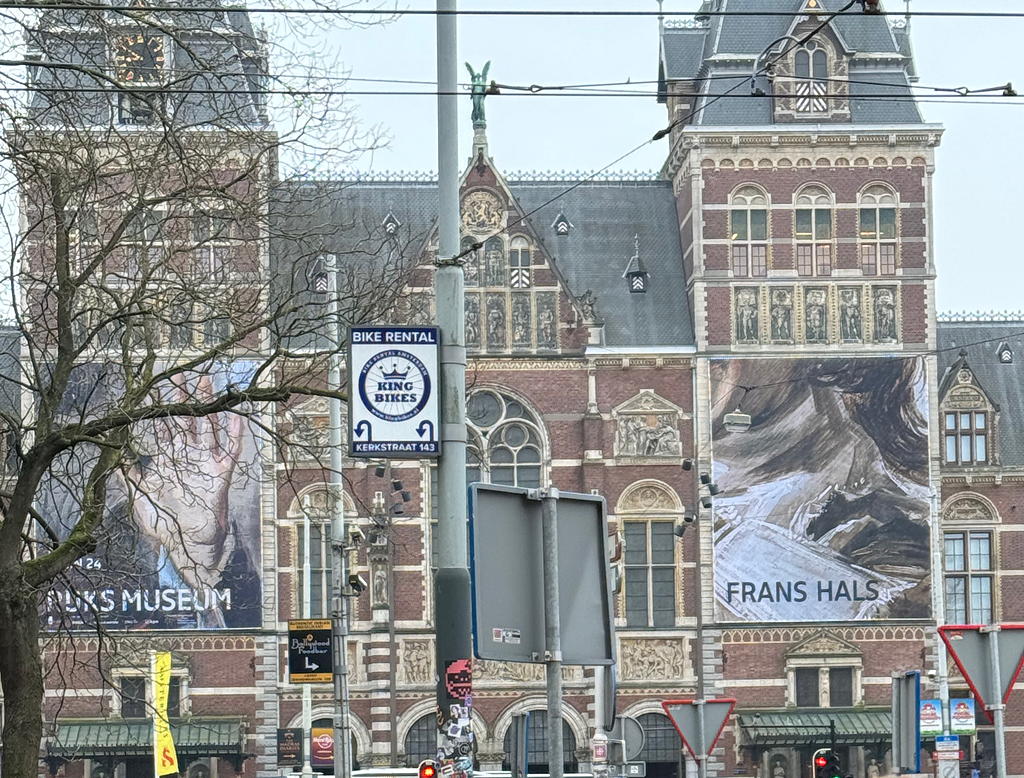
Thank goodness for in-room espresso! Someone would have died if I hadn’t tanked up before the breakfast buffet. The buffet did a good job of filling the void so I could pretend to be human and get away with it! The concierge directed a zombie (me) to the tram line, a whole 3 minutes walk away from the hotel. Buying a 96 hour ticket was easy through the GVB app; I activated my GVB ticket with the hotel wifi and I was all set to go. You have to scan you ticket going into and coming out of the tram, bus, metro station – there must be some sort of distance/region charge. Using the ticket was a bit of pain since my phone kept wanting to pay for a new ride via Apple pay even when I was scanning out of the tram – never did figure out what setting to change. A tram to Amsterdam Centraal followed by a metro ride to a subway station near the museum went smoothly. The trams and the metro were quiet in the morning; people didn’t talk or used library voices. It wasn’t like the Boston trains where, depending on the line, you might have to shout to be heard by the person next to you. Oh, I did witness minor traffic jams in the morning as I waited for the museum to open. At some intersections, I frequently saw a clot of 12 – 15 bicycles on a road with a yield sign, waiting for a gap in the bicycle traffic to make a turn or cross a rotary. That’s an Amsterdam traffic jam! There are more bikes than people in Amsterdam and most people appear to ride their bike to work, even the trams have bike areas on board or entire bike cars depending on the line. It all makes for a much quieter commute in the morning.
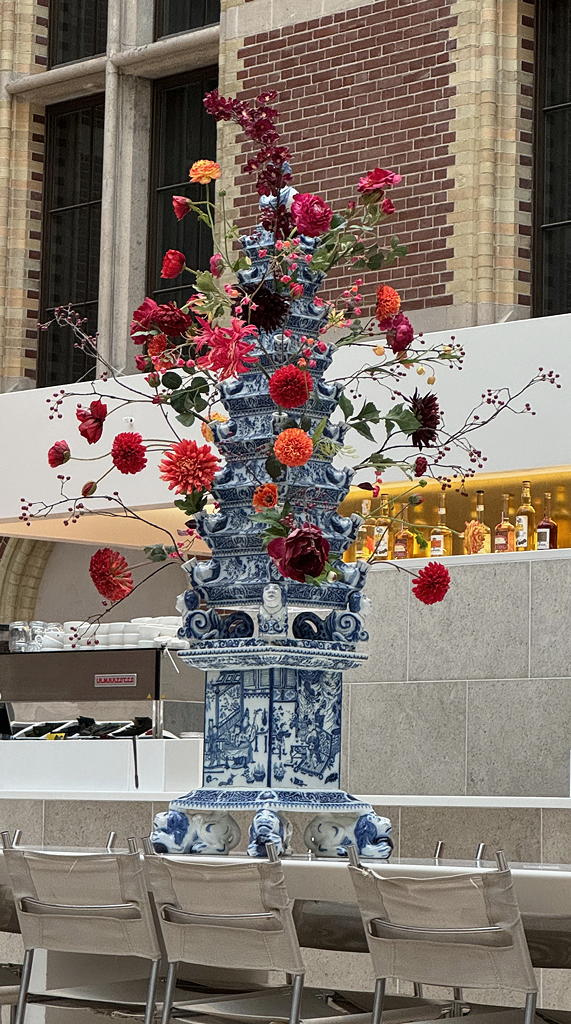
The line for museum entry moved pretty quickly once the museum opened. I stowed my backpack in a locker and hit the cafe for another dose of coffee before entering the collections. I thought that this flower arrangement was a fine use of Japanese style pottery. Pretty and demure.
The museum is basically organized by time period with the 20th century on the top floor. There’s an excellent Rijksmuseum app on both the App Store and Google Play which allows one to see and learn about the collections, even if you are not in the museum; I highly recommend it! I took an elevator to the top floor – partly to avoid crowds, partly to work my way backwards in time from the 20th century. On the top floor, there was a terrific video of life in the post war Philips factory. Done in black and white, it showed how Philips radios, speakers and vacuum tubes were made. It struck me that here were assembly lines of people, not machines, making parts of products from a conveyer belt of parts. The jobs seemed repetitive but not completely robotic. From the number of workers in the film, this must have been a large scale operation, employing hundreds if not thousands. Most of that work is gone or completely mechanized now. It seems like a victory and a loss at the same time.
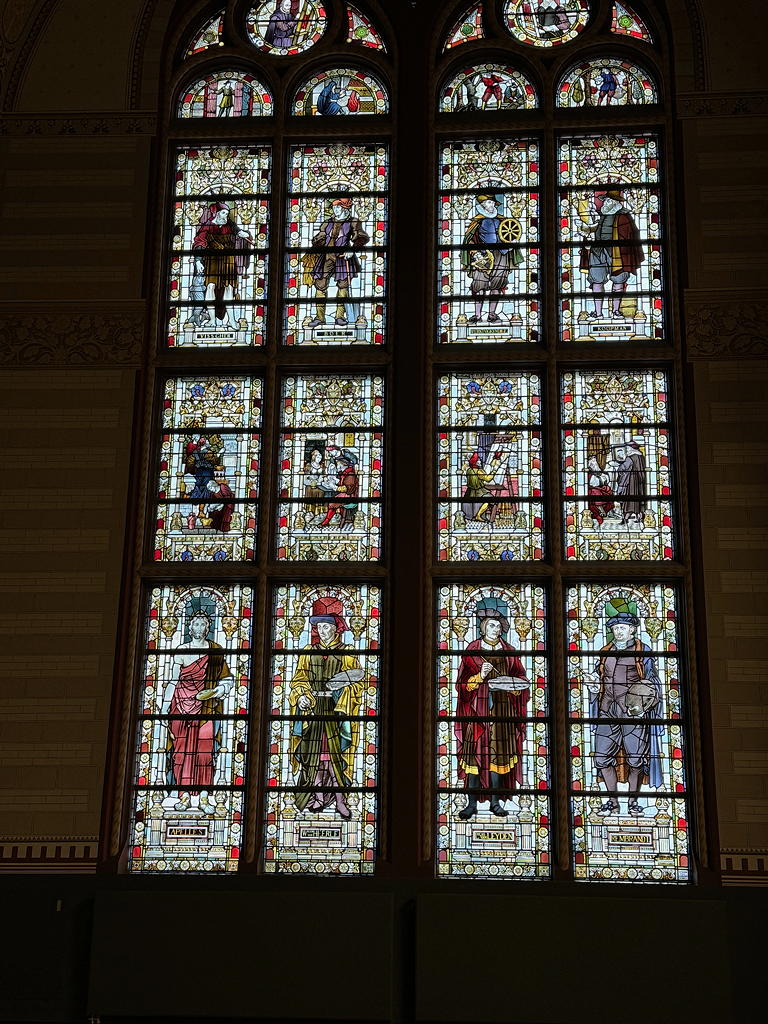
Downstairs was the Great Hall, Gallery of Honor and The Night Watch. The stained glass of the Great Hall was impressive. Filled with tourists, school tours and children, the Gallery was a bit noisy and full of activity. I was able to have a good look at a lot of paintings. It struck me that reproductions and photos tell what the scene portrays, sometimes where the scene is and maybe why the painting was composed and framed as it was. You have to see the actual piece to know something about the how the effects were achieved. The Night Watch is at the end of the Gallery of Honor. The painting is huge. I could not get a good view or photo with so many school groups. Besides after 3 hours in the museum, I was exhausted! It was Wednesday – the day after a long flight – a good time to grab a light lunch and head back to the hotel.

 Round the World in 110 days