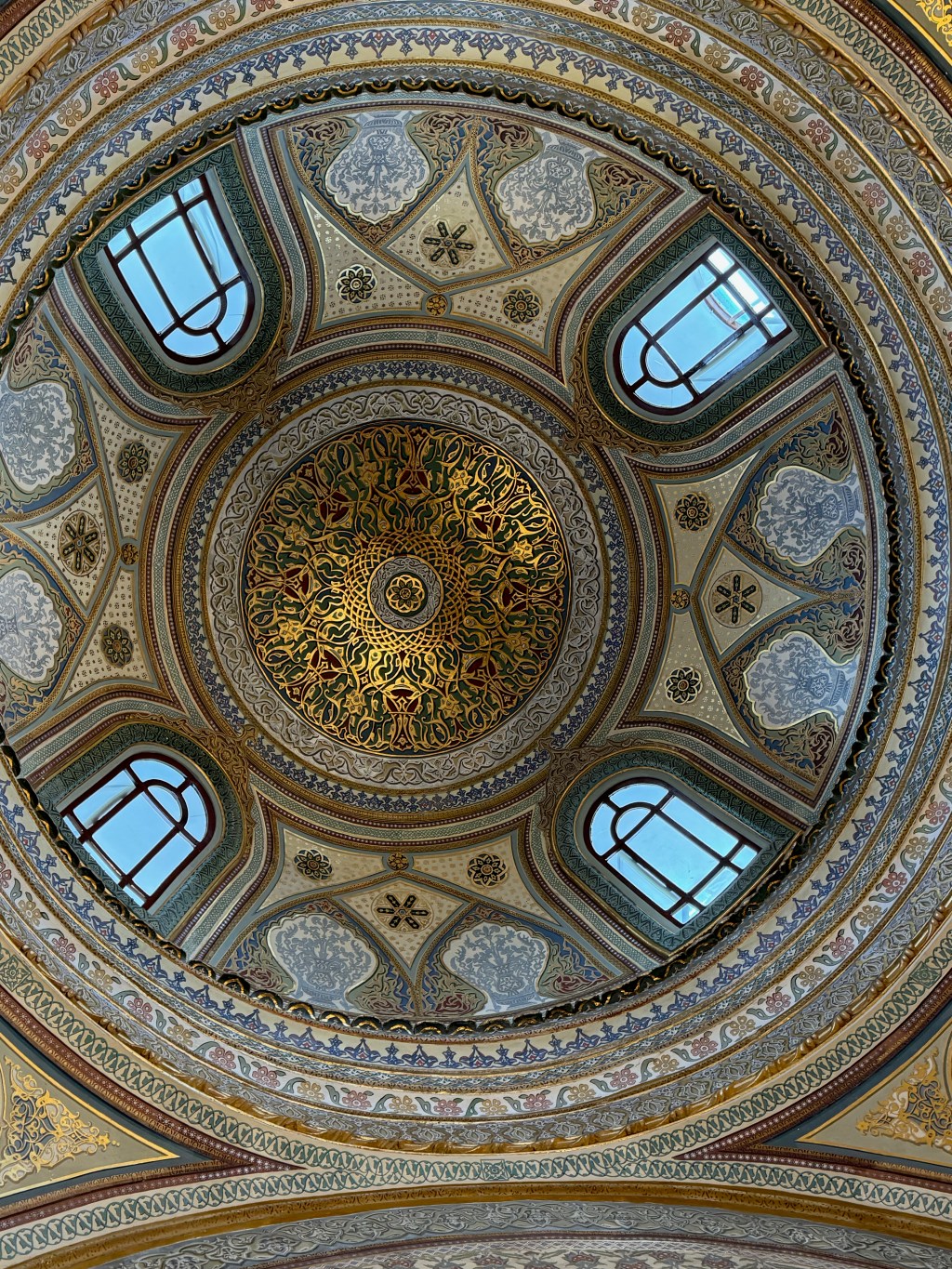
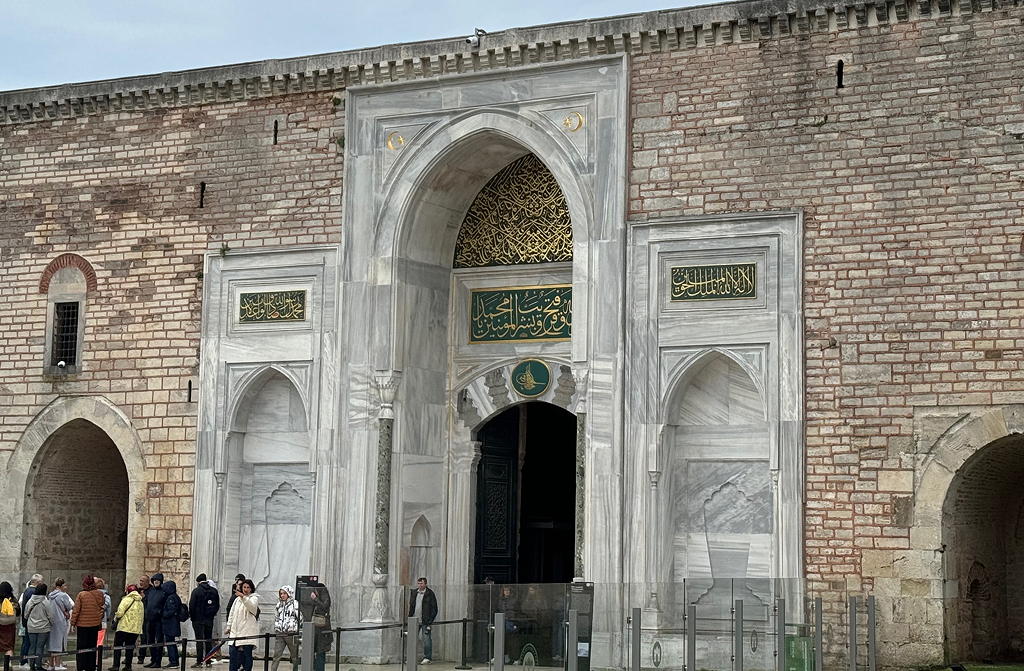
Though I did not note it before, Topkapi palace has several courtyards. The security gate I passed thru via the Gardens opens on the First Courtyard, a large open area where one buys entry tickets. The Gate of Salutation on the left and the Hagia Irene on the right. The Imperial Gate is something else entirely.
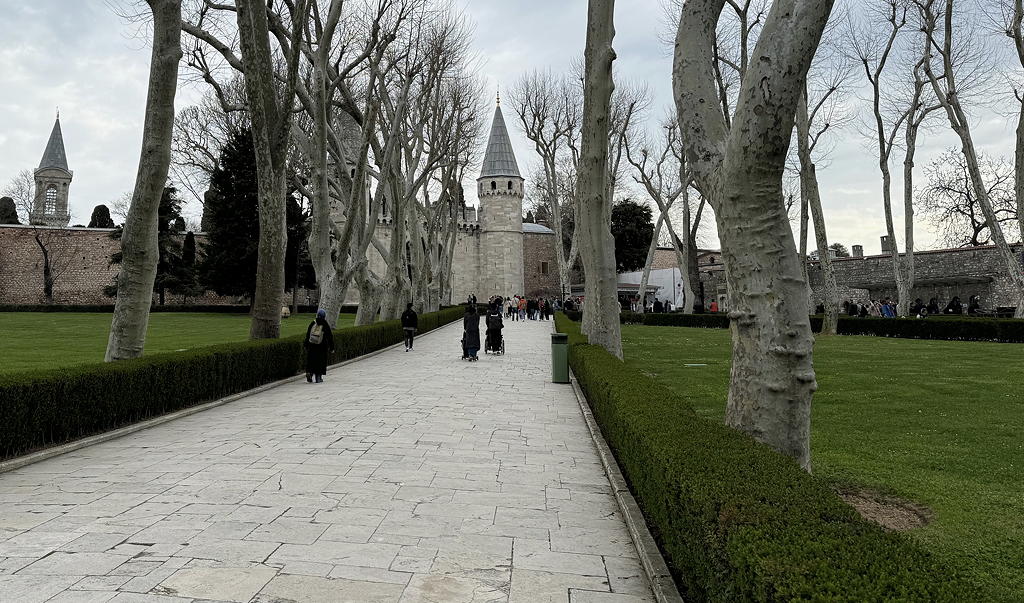

The Gate of Salutation is followed by the Second Courtyard, a large very well manicured garden space leading to the Tower of Justice, the Imperial Council Building and the Gate of Felicity which leads to the Inner Courtyard. I could also see a long massive building to my right with many chimneys – that must have been the kitchens; though we did not tour that space, I do recall Mr Onur telling me that it took several hundreds of servants to feed and serve the thousands of people in the palace.
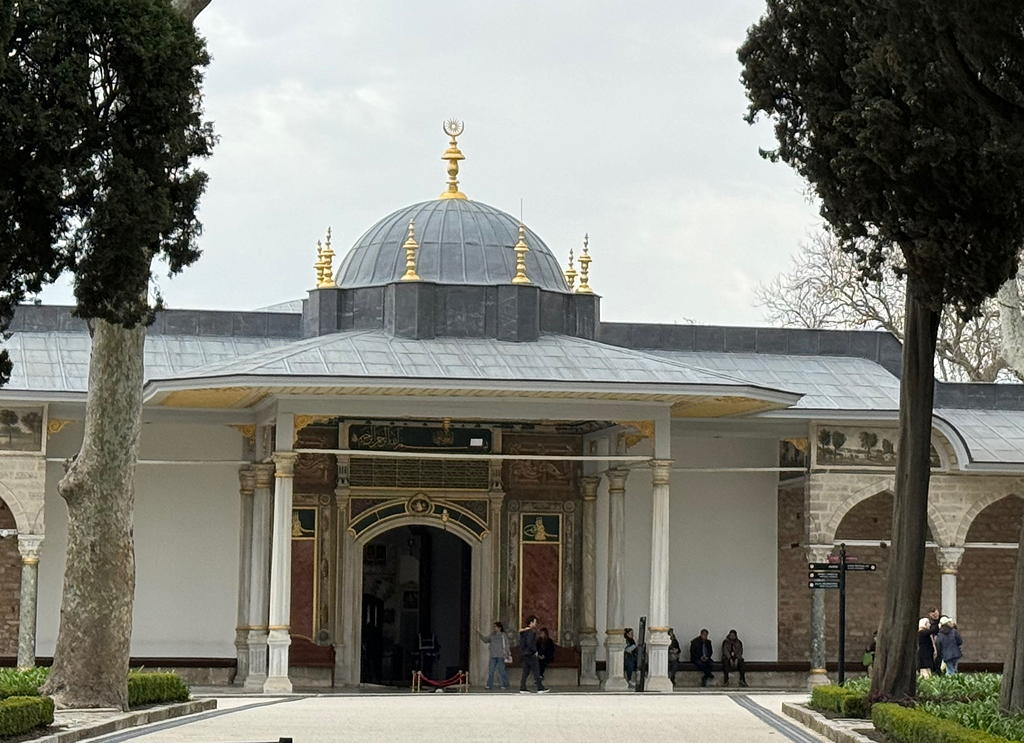
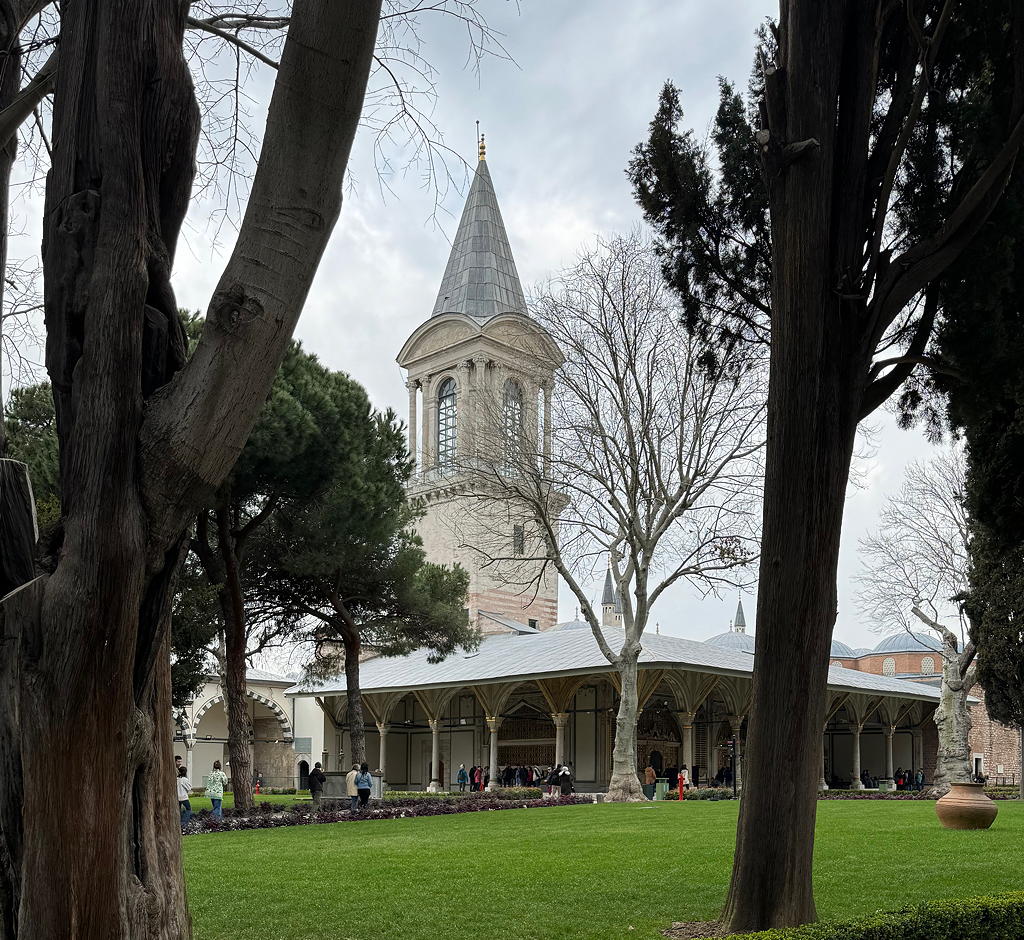
The Gate of Felicity leads to the Third Courtyard or the Inner Palace where only the sultan, his family – which included pages to be trained as administrative officials and provincial governors- and high ranking servants were permitted.
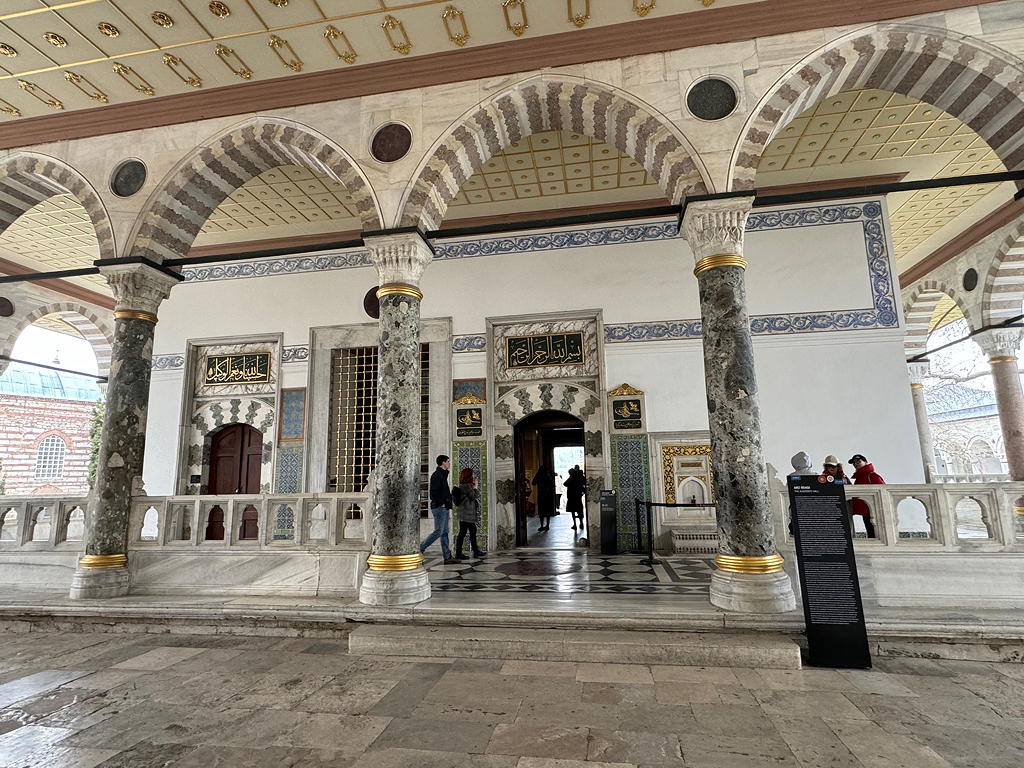
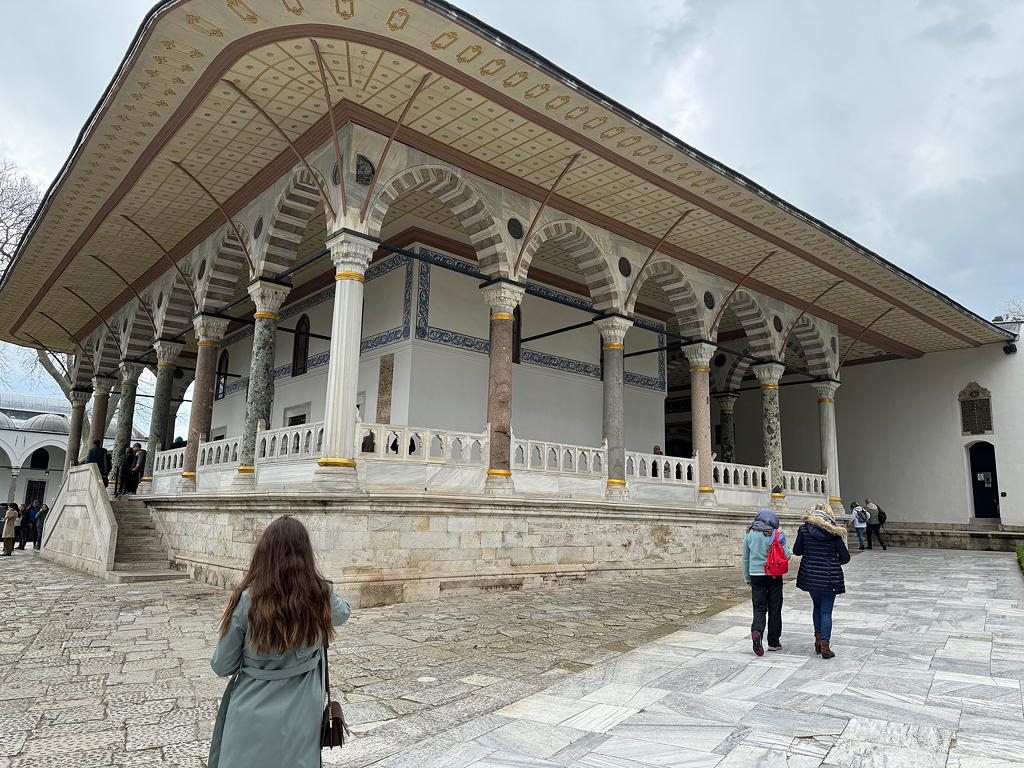
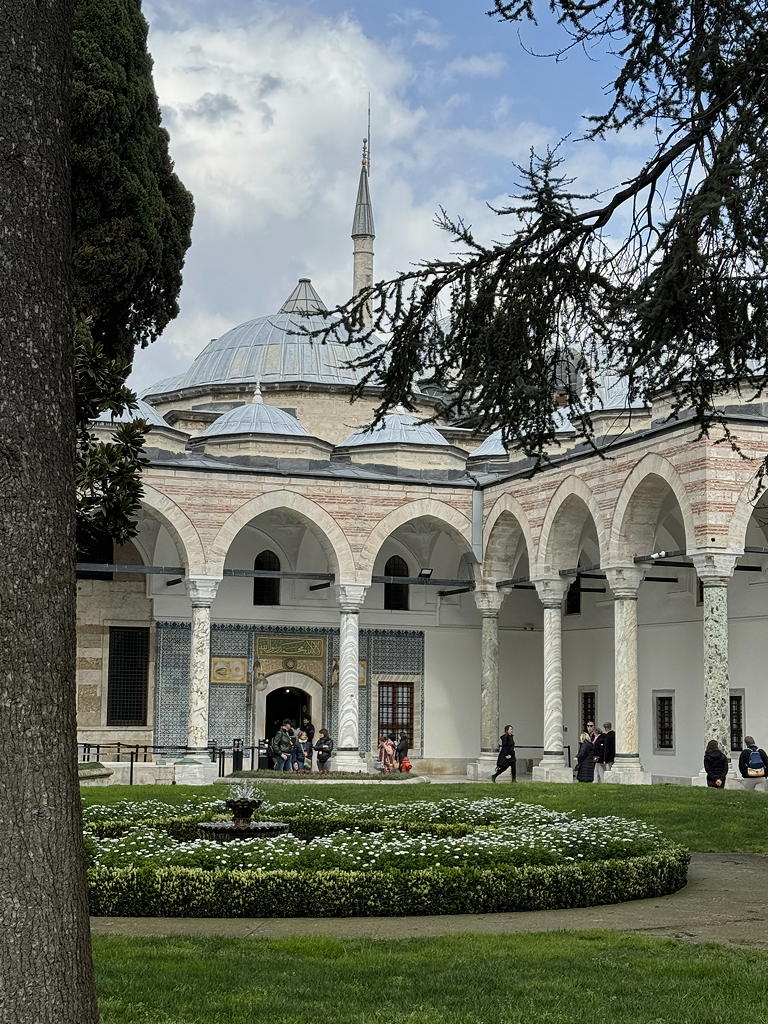
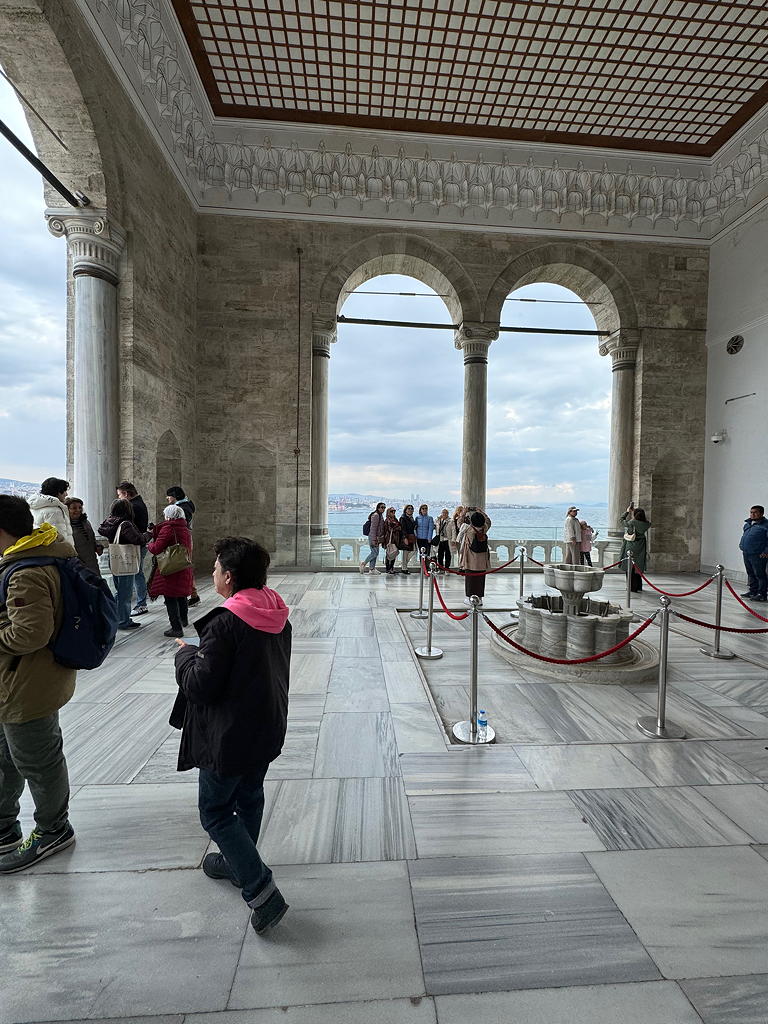
The Inner Palace contained the quarters for the pages, the harem, the treasury and the Conqueror’s Pavilion where there was a balcony of sorts facing the Bosphorus: a beautiful open view of the strait and Asia. I don’t think I captured the space well in my photos but I could imagine sitting and thinking in that space for hours.
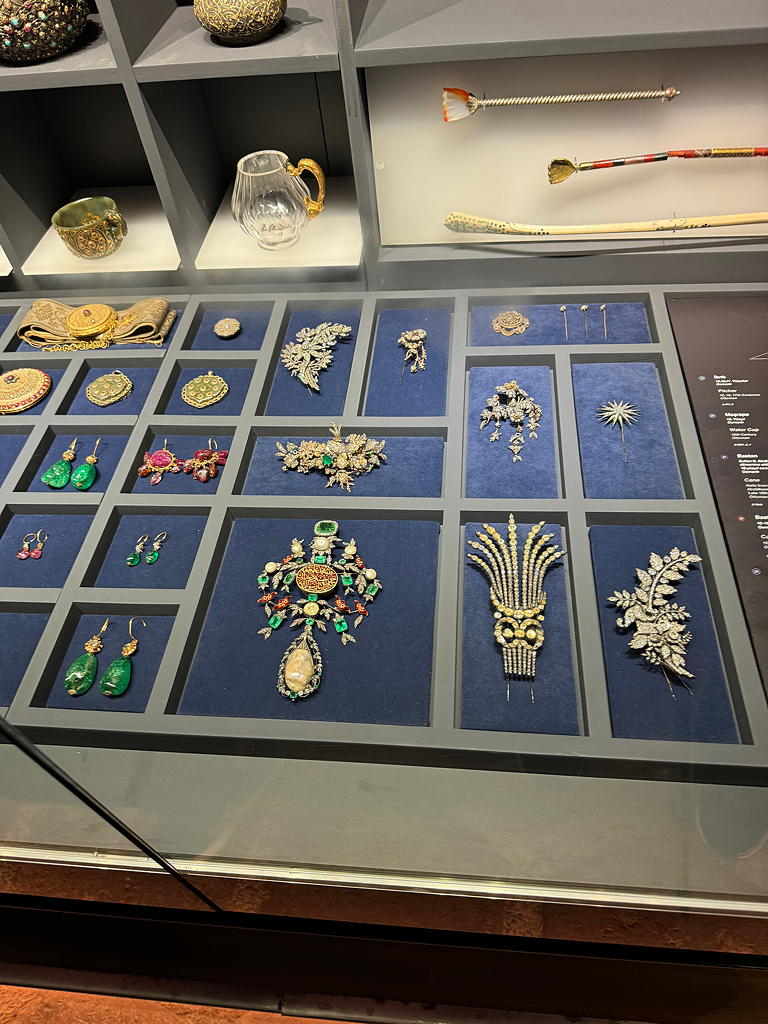
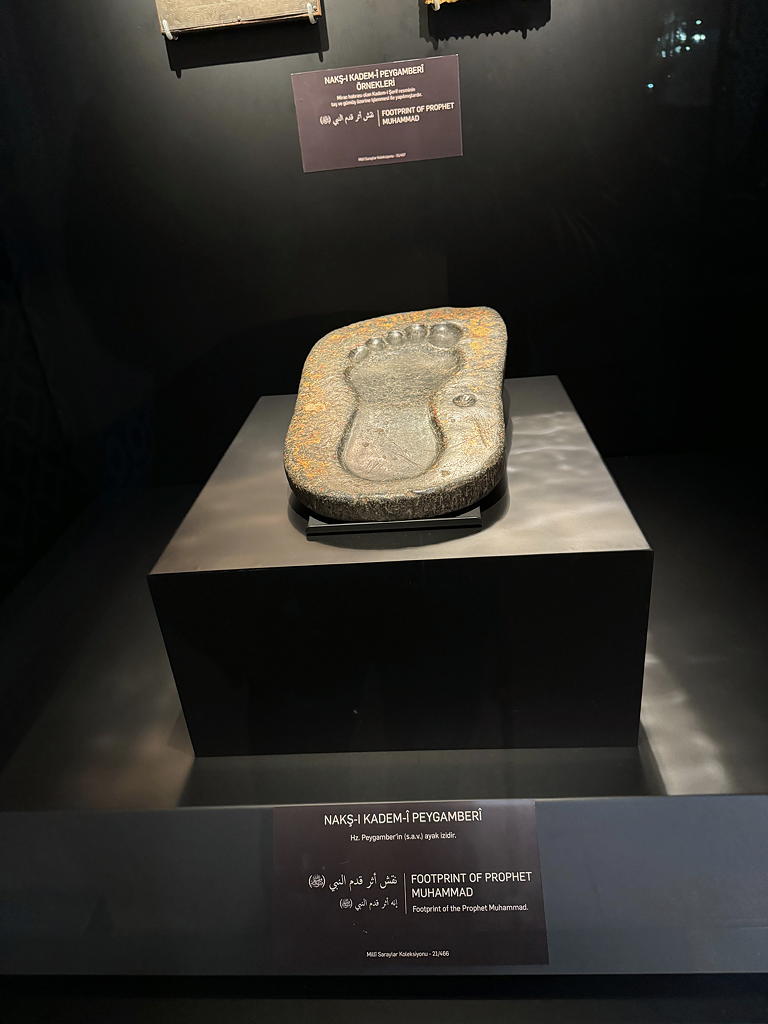
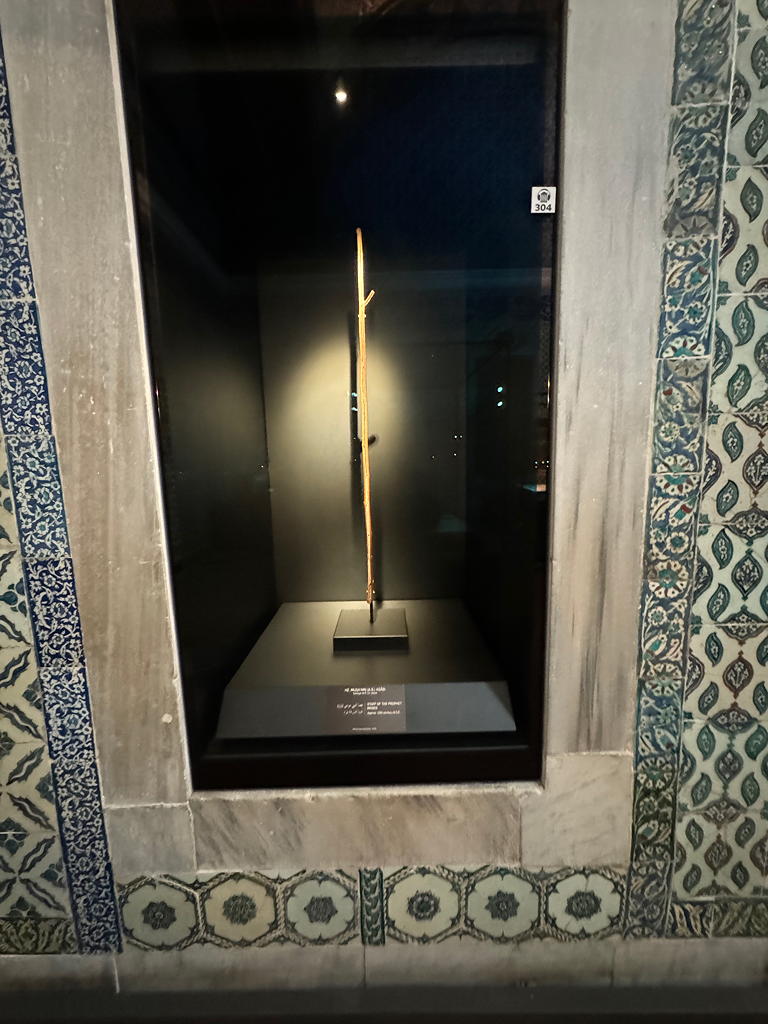
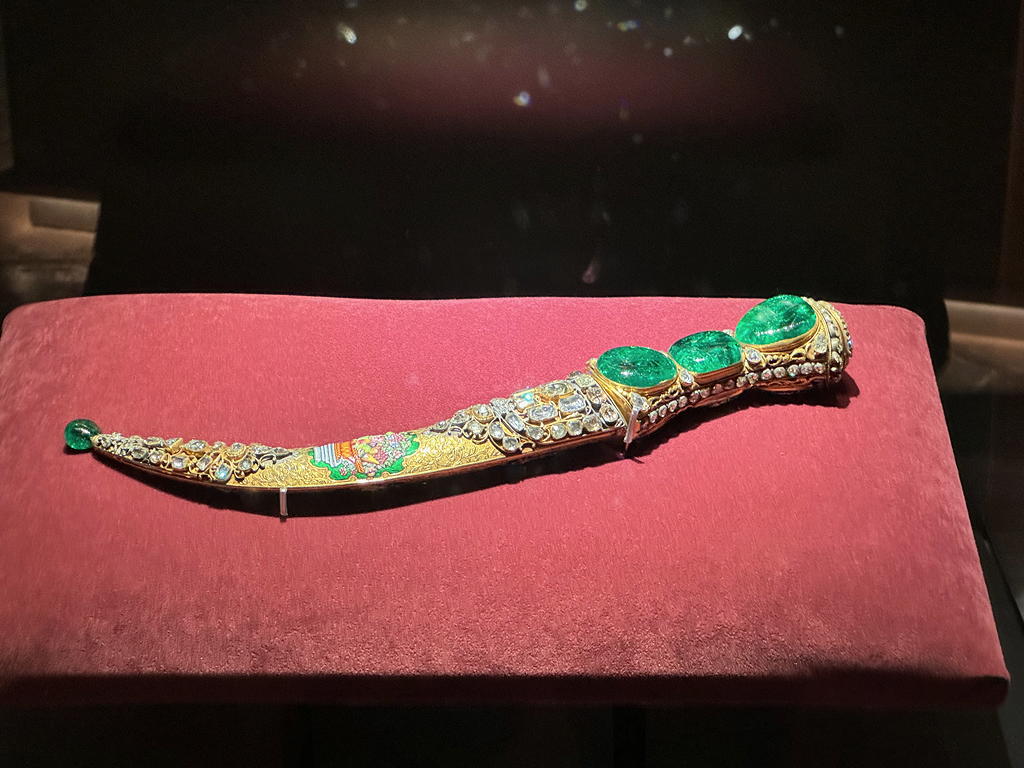
I took a lot of photos of the collection including items like the emerald dagger (featured in the movie Topkapi from the ‘60s), the footprint of Mohammed and Moses’s staff; items like these were gathered from sites throughout the Ottoman Empire and given to the sultan and his family. We did not discuss the provenance or authenticity of the displayed items.
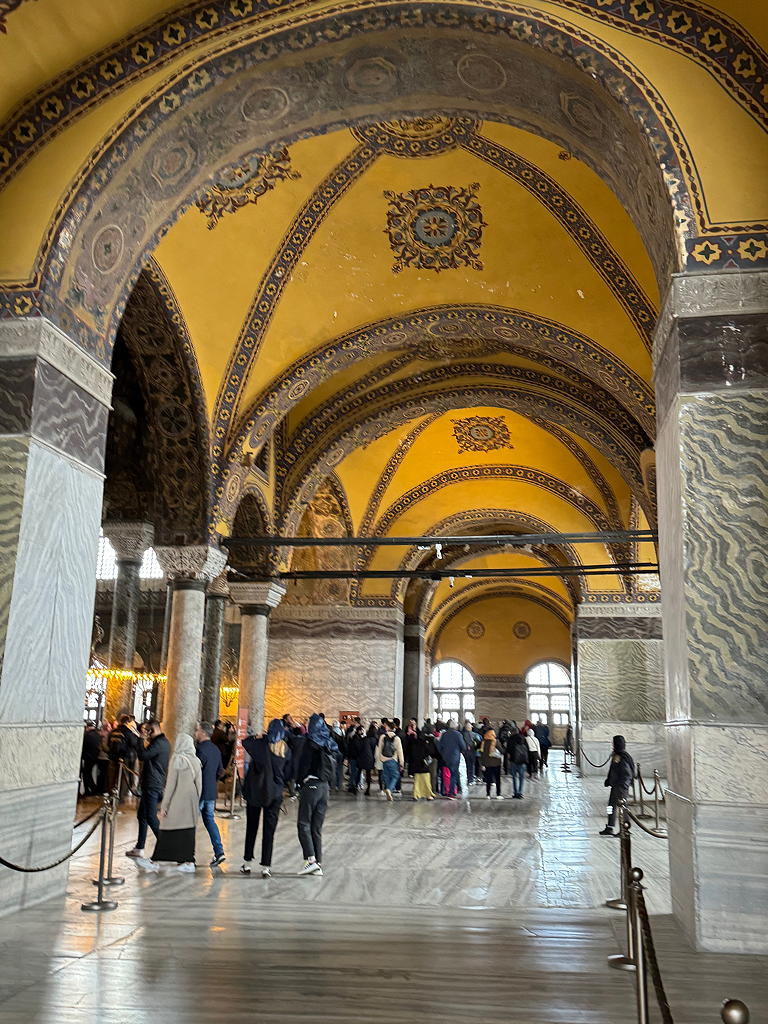
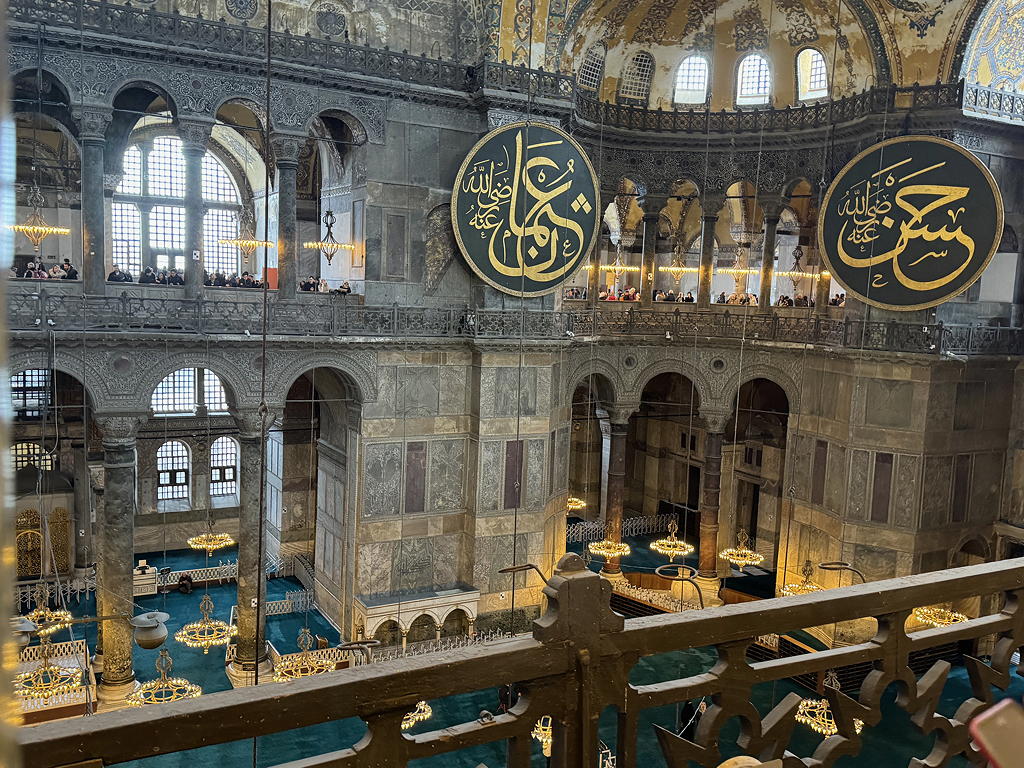
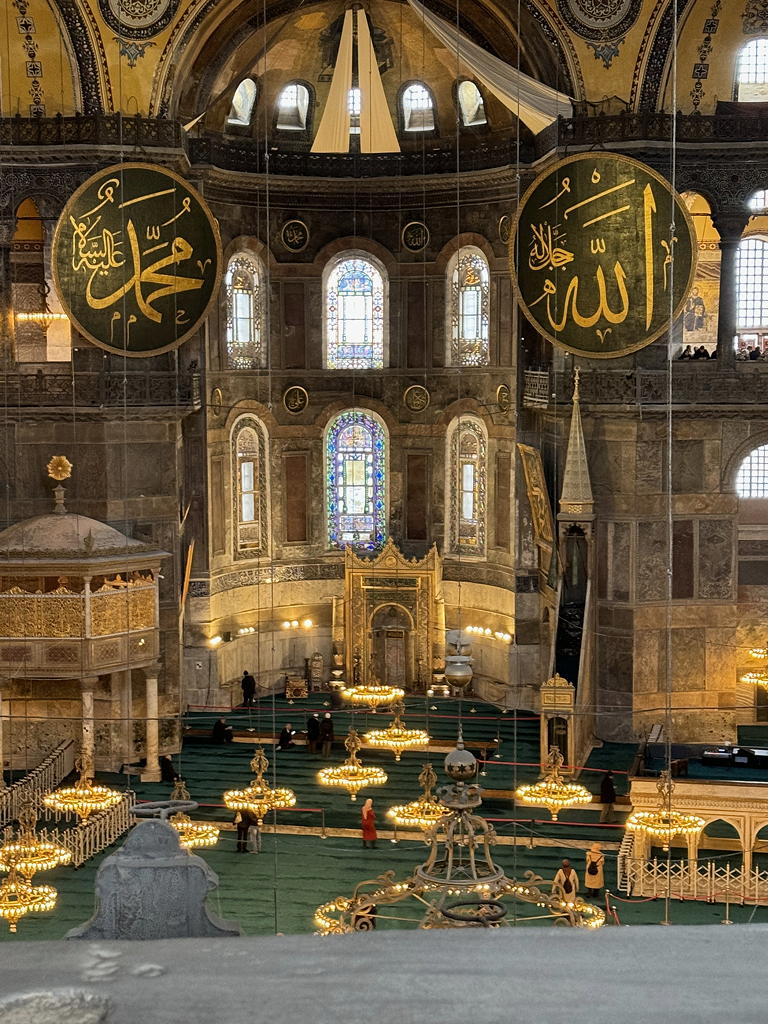
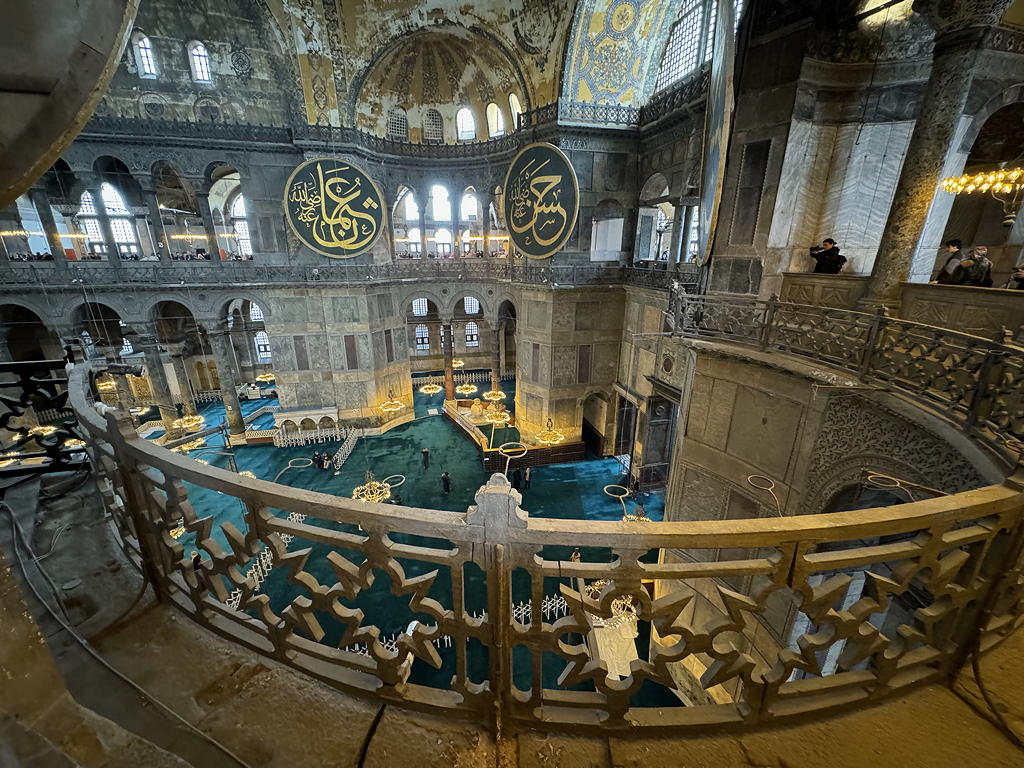
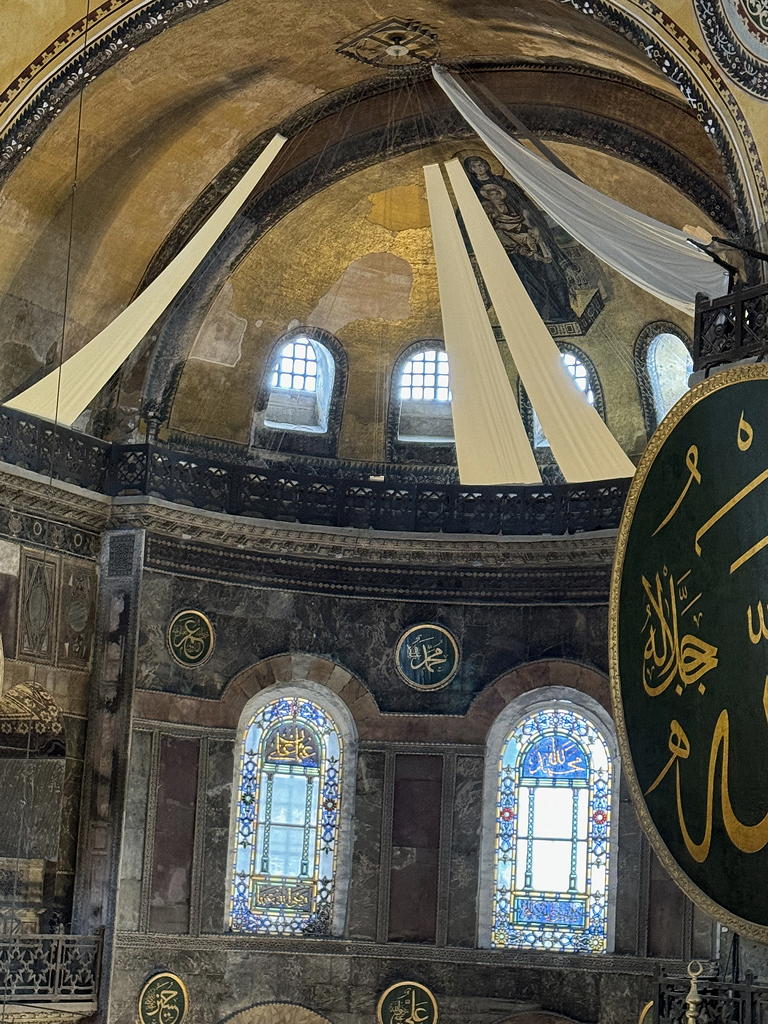
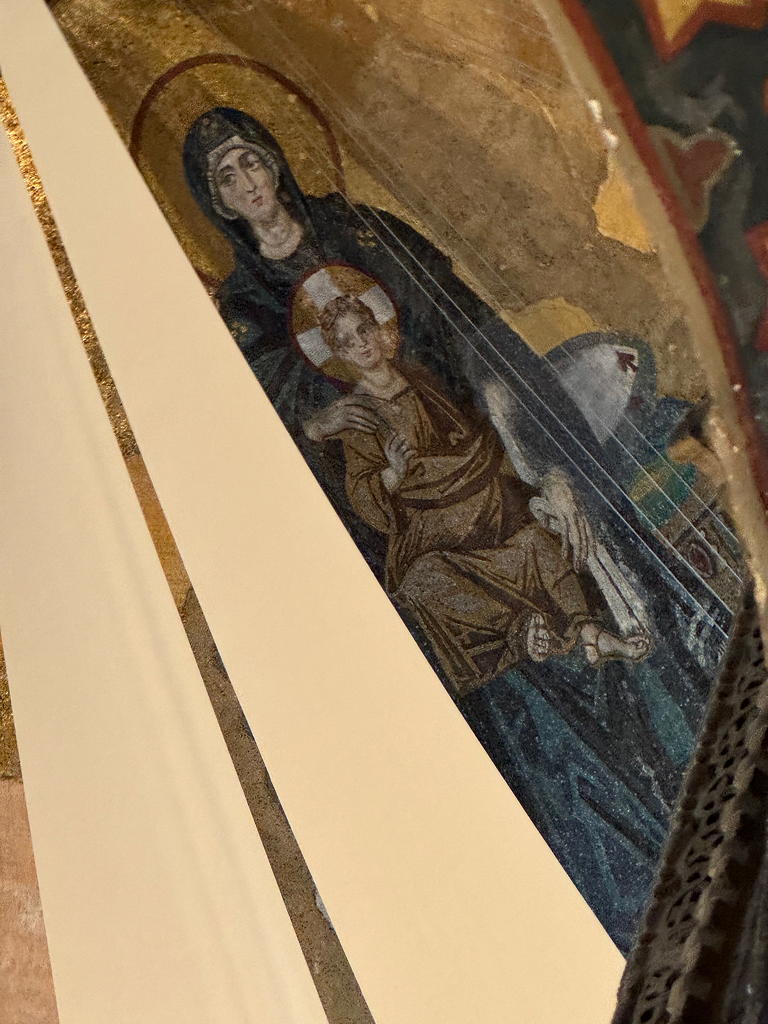
My knee was still holding out so we went to the Hagia Sofia. The building began as an Eastern Orthodox church, then a Catholic church then a mosque, then a museum and, in 2020, a mosque again. It is now a church museum on the second floor and a mosque on the first floor. The climb up to the second floor along ramps (so much easier than stairs!) which really challenged my knee. It was very much worth the trip. One bit of note: Since human images are not allowed to be seen in a mosque, the paintings and tile work of the church, depicting the Madonna and Child or Saints are screened from the mosque worshipers below but not defaced or destroyed.

 Round the World in 110 days